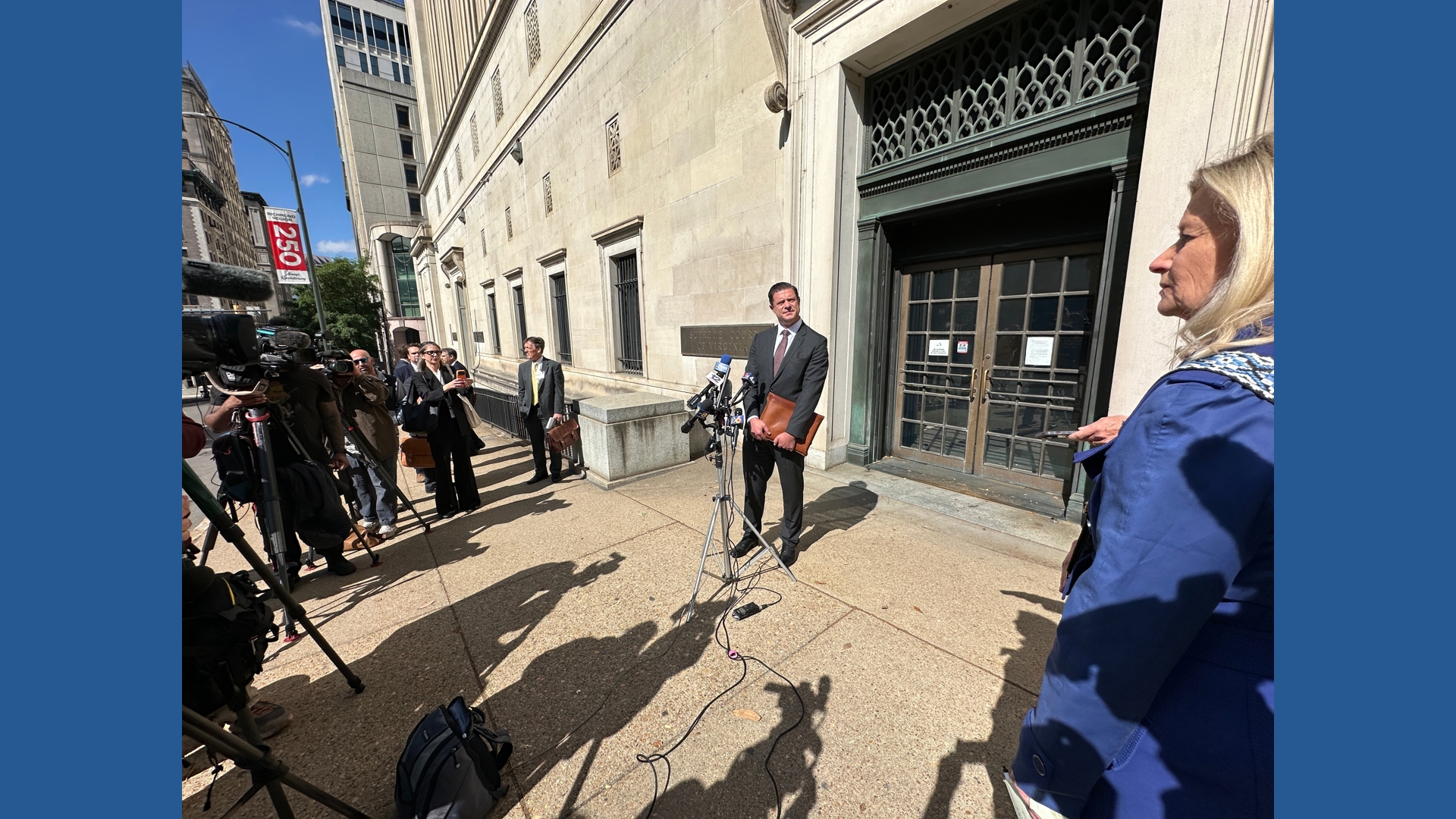
A seismic clash over democracy, representation, and judicial authority is unfolding in Richmond. The Virginia Supreme Court is now considering whether to block a voter-approved congressional map that tilts heavily in favor of Democrats—a move that could upend years of reform and reignite partisan warfare. At the heart of the case is a question as old as American governance: who decides how voters are represented?
This isn’t a technical redistricting dispute buried in census data. It’s a direct confrontation between Virginia voters, a newly independent redistricting commission, and an unelected judiciary. The approved map, drawn under a constitutional amendment passed by voters in 2020, grants Democrats a structural edge in at least six of Virginia’s 11 congressional seats. Republicans argue it’s an unconstitutional power grab. Democrats call it a legitimate correction to decades of GOP gerrymandering.
The court’s decision could set a precedent not just for Virginia, but for every state grappling with how to balance voter intent, legal standards, and partisan outcomes.
The Origins of Virginia’s Redistricting Reform
Virginia’s current redistricting crisis didn’t emerge overnight. For decades, the state legislature—controlled alternately by Republicans and Democrats—drew congressional and legislative maps that maximized partisan advantage. The result? Safe seats, uncompetitive elections, and voters effectively choosing their candidates before ballots were cast.
In 2020, fed up with manipulation, Virginia voters approved a constitutional amendment to strip map-drawing power from the legislature. Instead, an 8-member politician commission and a 9-member citizen advisory board were tasked with drawing fair maps—with courts stepping in only if the commission deadlocked.
That’s exactly what happened.
After failing to agree on final maps, the task defaulted to the Virginia Supreme Court, which appointed a special master—retired judge David Bernhard—to draw the new boundaries. His final map, released in December 2023, was designed to comply with the Voting Rights Act and create two majority-Black districts. But it also cemented a Democratic lean across the state’s congressional delegation.
Why Republicans Are Challenging the Map
Republicans argue that the court-appointed map violates the Virginia Constitution in two key ways:
- Partisan Bias: They claim the map intentionally favors Democrats, failing the constitutional requirement for “nonpartisan criteria.”
- Geographic Integrity: The map splits numerous localities and cities—including Richmond, Norfolk, and Virginia Beach—into multiple districts, undermining community cohesion.
A coalition of Republican lawmakers and conservative voters filed a lawsuit asserting that the court overstepped its role. “The judiciary is not a super legislature,” said Del. Tim Hugo, one of the plaintiffs. “We can’t let judges redraw maps to achieve a political outcome, no matter which party benefits.”
The timing is tense. The 2024 election cycle is underway, and delays in finalizing districts risk disrupting candidate filings, voter education, and campaign logistics.
Democratic Defense of the Voter-Backed Process
Democrats, civil rights groups, and good-government advocates counter that the map resulted from a transparent, legally compliant process rooted in voter will.
They point to the 2020 ballot initiative as proof: Virginians didn’t just want change—they demanded it. The constitutional amendment was a direct rebuke to partisan gerrymandering, not a mandate for perfect partisan balance.
“The voters said they wanted an end to gerrymandering,” said Del. Marcia Jackson. “This map reflects that. It complies with federal law, protects minority voting rights, and was drawn by an independent court-appointed expert—not politicians.”
They also stress that the Democratic advantage isn’t extreme. In a state that has voted for Democratic presidential candidates in the last four elections, a 6-5 Democratic edge in House seats aligns with statewide voting patterns. Prior GOP-drawn maps had produced 6-5 Republican majorities despite similar statewide trends—evidence, they say, of past manipulation.
The Legal Tightrope: Can Courts Block a Voter-Initiated Outcome?
The Virginia Supreme Court now faces a dilemma. On one hand, it must uphold constitutional standards. On the other, it must avoid appearing to override the democratic process it’s sworn to protect.
This case turns on how the court interprets “nonpartisan” in the redistricting context. Does it mean no partisan effect? Or no intentional partisan manipulation?
Legal experts are divided.
“This map wasn’t drawn to benefit Democrats,” said Rebecca Green, co-director of the Campaign Legal Center’s democracy program. “It was drawn to comply with racial fairness and geographic contiguity. The partisan outcome is a byproduct, not the intent.”
But others caution that if courts ignore clear partisan skew, they risk undermining public trust. “Neutral processes can’t produce wildly unbalanced outcomes and still be called fair,” said Hans von Spakovsky of the Heritage Foundation. “The court has a duty to intervene.”
Real-World Impacts on Voters and Candidates
The stakes extend far beyond legal theory. How this map is resolved will affect real people across Virginia.
Take the 7th Congressional District, stretching from Richmond to the Shenandoah Valley. Once a narrowly held Republican seat, the new map makes it a toss-up—possibly Democratic-leaning. Incumbent Rep. Abigail Spanberger, who previously won in a purple district, now faces a redrawn electorate with different priorities.
In Hampton Roads, the 2nd District includes newly merged areas of Norfolk and Virginia Beach. Local leaders worry the split communities weaken regional advocacy and confuse voters about representation.
Candidate planning is also in flux. Without final maps, potential challengers can’t target outreach, fundraisers hesitate to commit, and local parties can’t organize effectively. The longer the uncertainty lasts, the greater the risk of chaos in what should be a routine election cycle.
National Implications of Virginia’s Decision
Virginia’s case is being watched far beyond the Blue Ridge Mountains.
States across the country—from Michigan to New York—are experimenting with independent redistricting commissions. Many share Virginia’s goal: take politics out of map-drawing. But all face the same challenge—how to define fairness when maps inevitably favor one party.
If Virginia’s Supreme Court blocks the map, it could embolden lawsuits in other states where courts or commissions have drawn maps with partisan leanings. Conversely, upholding the map could signal that courts can ratify outcomes that align with voter-backed processes—even if they benefit one party.
“Virginia is a test case for whether reform can survive judicial scrutiny,” said Michael Li of NYU’s Brennan Center. “If the court overturns this map, it could chill reform efforts nationwide.”
Past Precedents Offer Mixed Guidance Virginia’s current standoff isn’t without precedent.
In 2019, the U.S. Supreme Court ruled in Rucho v. Common Cause that federal courts cannot police partisan gerrymandering, calling it a “political question” beyond judicial reach. But that decision left room for state courts to act under their own constitutions.
And state courts have done exactly that.
- North Carolina (2022): The state Supreme Court struck down a Republican-drawn map as an unconstitutional partisan gerrymander. (The ruling was later reversed after court composition shifted.)
- Ohio (2023): The state Supreme Court rejected multiple Republican-backed maps for favoring one party, citing constitutional fairness clauses.
- New York (2022): The state’s top court invalidated a Democratic-drawn congressional map, calling it a “blatant” partisan gerrymander.

These cases show that state courts can and do intervene—but only when partisan intent is clear and constitutional language supports it.
Virginia’s constitution doesn’t explicitly ban partisan gerrymandering. Instead, it requires maps to be “contiguous, compact, and maintain communities of interest.” The challenge for the court is determining whether a Democratic-leaning map violates those standards—or simply reflects modern demographics and voting behavior.
What’s Next for Virginia’s Redistricting Process?
The Virginia Supreme Court is expected to rule before the 2024 candidate filing deadline in March. If it blocks the current map, it could either commission a new special master or send the process back to the redistricting commission.
Either way, time is short.
A new map would need to be drawn, vetted, and approved under intense scrutiny—raising concerns about transparency and due process. A last-minute change could disenfranchise voters who’ve already engaged with the current districts.
Alternatively, the court could uphold the map, allowing elections to proceed under Bernhard’s boundaries. That would likely prompt Republican appeals to the U.S. Supreme Court—though, given Rucho, federal intervention remains unlikely.
A Defining Moment for Virginia Democracy
At its core, this case is about accountability. Who holds power in a democracy—the voters who approved reform, or the judges interpreting it?
Blocking the map may feel like defending neutrality. But it also risks looking like partisan intervention, especially if the outcome benefits Republicans. Upholding it affirms the will of the people, but could normalize maps that entrench one party’s power.
There are no clean answers. But one thing is clear: the Virginia Supreme Court isn’t just deciding district lines. It’s shaping the future of fair representation in the state.
For voters, candidates, and reformers, the path forward must prioritize transparency, legal integrity, and respect for the democratic process—even when the outcome isn’t perfectly balanced.
Act now: Stay informed through nonpartisan outlets like the Virginia Public Access Project and Common Cause Virginia. Attend public hearings, contact your local representatives, and demand clarity on redistricting timelines. The integrity of your vote depends on it.
FAQs
Why is the Virginia Supreme Court involved in drawing maps? Because the bipartisan redistricting commission failed to agree on a final map, the Virginia Constitution requires the Supreme Court to appoint a special master to draw the boundaries.
Does the new map guarantee Democratic control of Virginia’s House seats? No. It creates a structural advantage—likely 6 Democratic seats to 5 Republican—but individual races will still depend on candidates, campaigns, and voter turnout.
How does this map affect minority representation? It creates two majority-Black congressional districts, complying with the Voting Rights Act and addressing past dilution of Black voting power in central and southern Virginia.
Can the U.S. Supreme Court overturn Virginia’s map? Unlikely. In Rucho v. Common Cause, the U.S. Supreme Court ruled that partisan gerrymandering is a political issue, not a federal constitutional one—leaving it to state courts and legislatures.
What happens if the court blocks the map? The court would likely appoint a new special master or return the task to the redistricting commission, risking delays before the 2024 elections.
Did voters approve this specific map? No. Voters approved the 2020 constitutional amendment creating the redistricting process, but not the final map itself. The map was drawn by a court-appointed expert after commission deadlock.
Could this lead to future gerrymandering under a different party? Yes. Without stricter constitutional limits on partisan bias, any party in power during redistricting—or influencing court appointments—could shape maps to their benefit under future conditions.
FAQ
What should you look for in Virginia Supreme Court Weighs Fate of Democrat-Favored House Map? Focus on relevance, practical value, and how well the solution matches real user intent.
Is Virginia Supreme Court Weighs Fate of Democrat-Favored House Map suitable for beginners? That depends on the workflow, but a clear step-by-step approach usually makes it easier to start.
How do you compare options around Virginia Supreme Court Weighs Fate of Democrat-Favored House Map? Compare features, trust signals, limitations, pricing, and ease of implementation.
What mistakes should you avoid? Avoid generic choices, weak validation, and decisions based only on marketing claims.
What is the next best step? Shortlist the most relevant options, validate them quickly, and refine from real-world results.