When Eliud Kipchoge crossed the finish line in under two hours during the controversial 2019 INEOS 1:59 Challenge, the world celebrated human endurance. But behind that moment wasn’t just elite training or perfect weather—it was footwear so advanced it sparked global debate. The shoes on his feet weighed less than a bar of soap, yet carried the force of a technological revolution. These weren't just running shoes—they were performance disruptors, redefining what’s possible in long-distance running.
This article dives into the engineering, ethics, and real-world impact of the ultra-lightweight shoes that helped break the marathon record—what makes them so effective, how they’ve changed competitive running, and whether they’re truly fair.
The Weight That Changed Everything
A standard bar of soap weighs between 90 and 100 grams. For decades, elite marathon shoes hovered around 200 to 250 grams per pair—plenty light, but far from revolutionary. Then came a new generation of racing flats that dropped individual shoe weight to under 200 grams combined. That’s right: both shoes together weighed less than one traditional racing flat.
The breakthrough wasn’t just about weight. It was about how that minimal mass was engineered to maximize energy return, stability, and stride efficiency.
Take the Nike AlphaFly NEXT%, worn by Kipchoge and countless record-setters. It clocks in at around 180 grams for a men’s size 9—about 90 grams per shoe. That’s literally lighter than a bar of soap.
But how do you make a shoe this light without sacrificing support, durability, or propulsion?
The Anatomy of a Record-Shattering Shoe
Lightweight doesn’t mean flimsy. These shoes are precision instruments built around three core innovations:
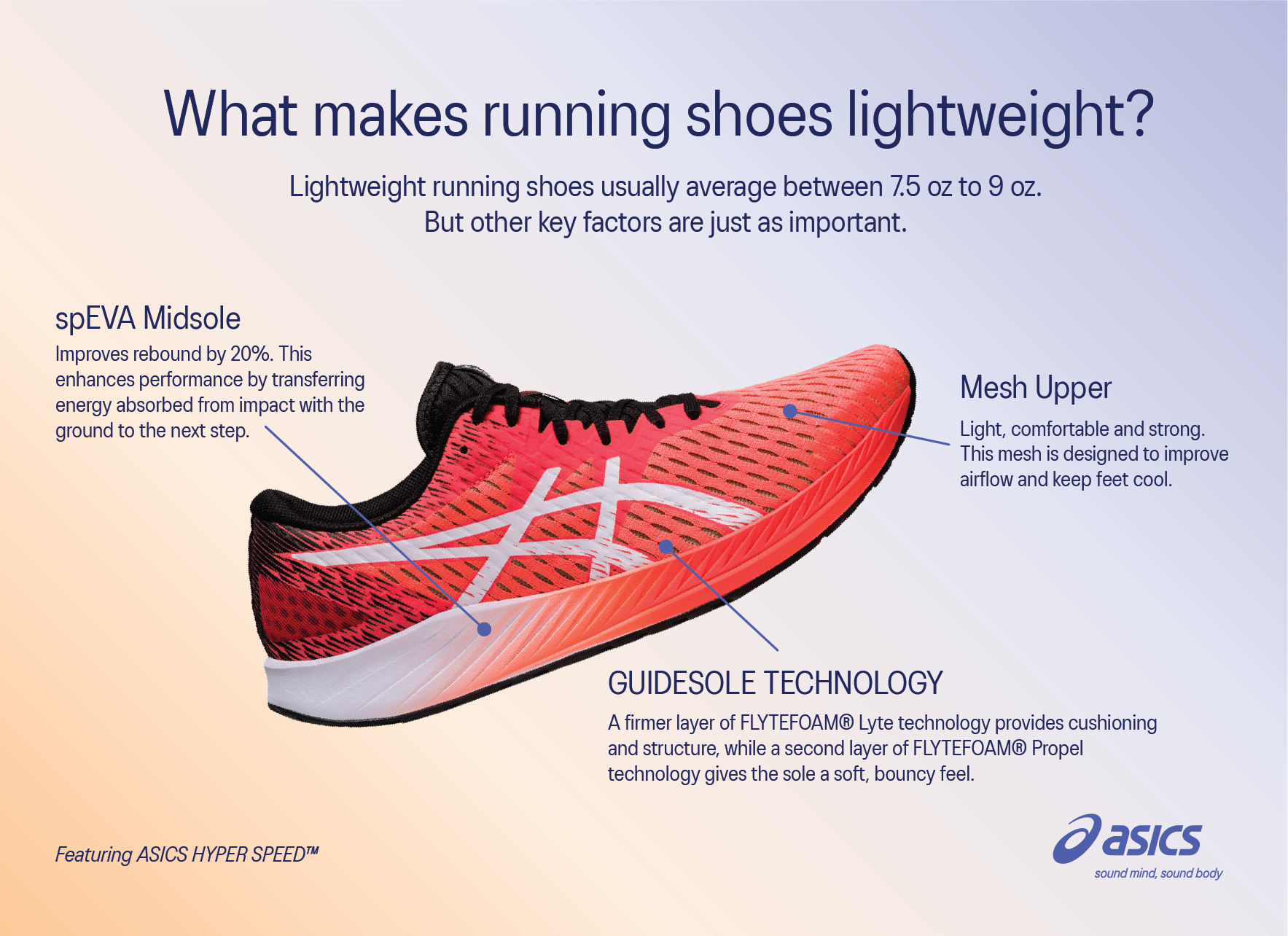
#### 1. Carbon Fiber Plates Embedded in the midsole, a curved carbon fiber plate acts like a spring. It stiffens the shoe to reduce energy loss during toe-off and guides the foot through a more efficient gait cycle. Think of it as a slingshot for your stride—each push forward gets a small mechanical boost.
#### 2. Thick, Super-Responsive Foam The midsole uses proprietary foams like Nike’s ZoomX, Adidas’ Lightstrike Pro, or Puma’s Nitro Elite. These materials are 85%+ energy return efficient—meaning almost all the energy you put into the ground comes back to you. They’re also incredibly lightweight, replacing heavier EVA foams used in older models.
#### 3. Strategic Weight Reduction Every gram is scrutinized: - Mesh uppers are made from single-layer, laser-perforated textiles. - Heel counters are molded, not stitched. - Glue is applied in micro-dots, not full seams.
The result? A shoe that feels like an extension of the foot, not a piece of equipment.
How These Shoes Rewrote the Record Books
The impact wasn’t theoretical. It was immediate and measurable.
When Kipchoge ran 1:59:40 in Vienna, he averaged 4:34 per mile—faster than most sprinters can maintain for 400 meters. While no official world record was recognized due to the controlled nature of the event, the technology on his feet was later validated in competition.
In 2022, Eliud Kipchoge ran the Berlin Marathon in 2:01:09—then shattered his own record in 2023 with a 2:00:35. That’s a 26.2-mile race at a 4:37 per mile pace. His footwear? A version of the Nike AlphaFly, calibrated for maximum efficiency.
But it’s not just Kipchoge. Over 90% of elite marathoners at major races now wear some form of super shoe—Nike, Adidas, or Puma variants with carbon plates and foam stacks. The correlation isn’t subtle.
- Boston Marathon 2023: 87% of top-100 finishers wore super shoes.
- London Marathon 2024: All podium finishers used carbon-plated racers.
- Sub-2:05 Marathoners: Increased by over 300% since 2016.
This isn’t just faster training. This is faster technology.
The Controversy: Are Super Shoes Cheating? When something shaves 2–4% off marathon times across the board, the question arises: is it still fair?
In 2020, World Athletics introduced new regulations: - Maximum sole thickness: 40mm (down from 50mm on early AlphaFly models). - Only one rigid embedded plate allowed. - Shoes must be available for purchase by the general public for at least four months before use in competition.
The rules were a direct response to accusations that the shoes provided an unfair mechanical advantage—essentially, “mechanical doping.”
Critics argue: - Only athletes sponsored by major brands get prototype access. - The cost (up to $275 per pair) excludes lower-income runners. - The performance gain is disproportionate to natural training improvements.
Supporters counter: - Technology has always shaped sport (think synthetic tracks or LZR swimsuits). - Access is improving—Nike now sells competition-ready models to the public. - The shoes require elite fitness to be effective; no shoe makes a 3-hour marathoner break 2:05.
Still, the debate rages. Are we measuring human limits—or engineering breakthroughs?
Real-World Performance: Not Just for Elites
While record-breaking makes headlines, these shoes have transformed amateur running.
Consider Sarah, a recreational runner in Portland. She trained for years to break 3:30 in the marathon. Her best was 3:32. Then she switched to a carbon-plated Nike ZoomX Vaporfly Next%—and ran 3:24 on her next attempt.
“It felt like I was running downhill the whole time,” she said. “My legs weren’t any stronger, but my pace just stayed easier.”
That’s a common experience. Studies show runners wearing super shoes improve efficiency by 2–4%. Over 26.2 miles, that’s 4–8 minutes for a 3-hour marathoner.
But there are caveats:
#### Common Mistakes Recreational Runners Make: - Using them for daily training: These shoes are built for speed, not mileage. Overuse leads to breakdown and injury. - Ignoring strength: The plate shifts load to calves and Achilles. Weak posterior chains increase injury risk. - Assuming they’ll fix form: Bad biomechanics still cause problems. The shoe can’t compensate for overstriding or poor posture.
#### Best Use Case: - Long runs at goal pace - Race day - Interval sessions (with proper warm-up)
They’re tools, not magic.
The Leading Super Shoes in 2024
Not all lightweight racers are created equal. Here are five leading models engineered to deliver marathon-breaking performance:
| Shoe Model | Weight (Men’s Size 9) | Key Technology | Best For |
|---|---|---|---|
| Nike ZoomX Vaporfly Next% 3 | 188g | ZoomX foam, full-length carbon plate | Race day performance |
| Nike AlphaFly Next% 3 | 190g | Dual ZoomX pods, dual carbon plates | Sub-elite marathoners |
| Adidas Adizero Adios Pro 3 | 205g | Lightstrike Pro foam, EnergyRods | High-mileage racers |
| Puma Deviate Nitro 2 Evo | 200g | Nitro Elite foam, carbon plate | Budget-conscious elites |
| Hoka Hyper Elite | 215g | Profly+ foam, carbon plate | Runners needing cushioning |
While Nike dominates the podium, brands like Adidas and Puma are closing the gap. Hoka’s entry proves even maximalist brands can innovate in the super shoe space.
The Future of Lightweight Racing Footwear
What’s next after soap-bar light?
Engineers are now targeting: - Even lighter foams with higher energy return - 3D-printed midsoles customized to individual biomechanics - Bio-integrated materials that adapt to fatigue levels
Some prototypes weigh under 150g per pair—less than a smartphone. But as weight drops, durability and regulation tighten.
The next frontier may not be weight at all—but intelligence. Shoes that adjust stiffness in real time, monitor muscle load, or even vibrate to correct form.
Until then, the current generation remains the most effective running footwear ever created—the lightest, fastest, and most controversial.
Final Thoughts: Lighter Isn’t Always Simpler
The shoes that shattered the marathon record aren’t just lighter than a bar of soap—they represent a fundamental shift in how we think about human performance.
They prove that marginal gains, when engineered precisely, can lead to monumental breakthroughs. But they also challenge us to define the boundary between athlete and apparatus.
For everyday runners, the takeaway isn’t to chase the lightest shoe on the market—it’s to choose one that matches your goals, form, and training level. The best shoe isn’t the lightest. It’s the one that helps you go farther, faster, and stronger—without breaking you.
If you're training for a marathon, consider testing a super shoe in key workouts. Just don’t expect miracles. The real work still happens in the miles, not the midsole.
Frequently Asked Questions
What does “lighter than a bar of soap” mean in running shoes? It’s a comparison highlighting how modern racing shoes weigh less than 100 grams per shoe—similar to a standard bar of soap—thanks to advanced materials and design.
Which shoe did Eliud Kipchoge wear to break the marathon record? Kipchoge wore variations of the Nike AlphaFly, specifically designed with carbon plates and ZoomX foam to maximize efficiency and speed.
Are carbon-plated shoes allowed in competition? Yes, but with restrictions. World Athletics limits sole thickness to 40mm and allows only one rigid embedded plate.
Can amateur runners benefit from super shoes? Absolutely. Recreational runners see efficiency gains of 2–4%, leading to faster times. However, they should be used strategically, not for daily training.
Why are super shoes so expensive? High costs come from R&D, proprietary foams, carbon plates, and low production volumes. Prices range from $200–$275.
Do lightweight shoes wear out faster? Generally, yes. The foams and plates are optimized for performance, not durability. Most last 150–200 miles under race conditions.
Are all lightweight racing shoes the same? No. Differences in foam density, plate shape, and fit affect performance. Runners should test models to find the best match for their stride.
FAQ
What should you look for in Lighter Than a Bar of Soap: The Shoes That Broke the Marathon Record? Focus on relevance, practical value, and how well the solution matches real user intent.
Is Lighter Than a Bar of Soap: The Shoes That Broke the Marathon Record suitable for beginners? That depends on the workflow, but a clear step-by-step approach usually makes it easier to start.
How do you compare options around Lighter Than a Bar of Soap: The Shoes That Broke the Marathon Record? Compare features, trust signals, limitations, pricing, and ease of implementation.
What mistakes should you avoid? Avoid generic choices, weak validation, and decisions based only on marketing claims.
What is the next best step? Shortlist the most relevant options, validate them quickly, and refine from real-world results.